Ramadan Restaurant Offers in Dubai: The Only Guide You Need to Eat Well This Holy Month

The moment the cannon fires across Dubai and the call to prayer fills the evening air, the city transforms. Traffic stops, streets hush, and then thousands of tables simultaneously fill with dates, warm soup, and the kind of communal energy that is genuinely difficult to describe to someone who has not experienced it firsthand.
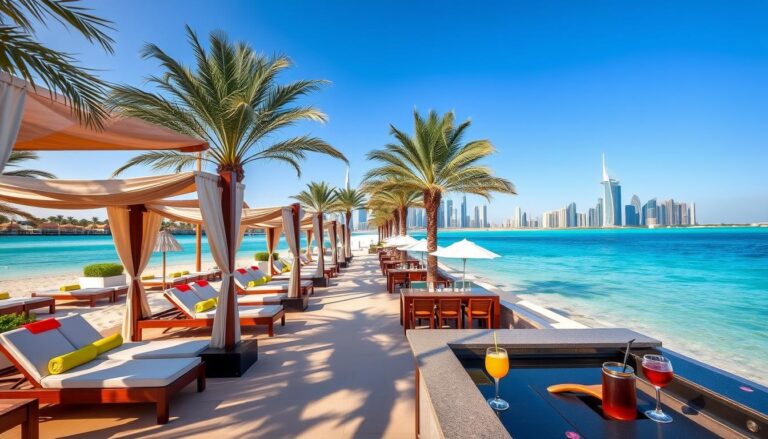
Iftar in Dubai is not just a restaurant experience. It is a cultural event you happen to eat at. And right now, the city’s restaurant scene has built an entire parallel universe around it. One that runs from sunset through to the early hours of the morning, with options ranging from AED 39 buffets in Deira to AED 410-per-head spreads inside five-star hotel pavilions with Burj Khalifa views.
Whether you are a Dubai resident who has somehow never explored the Ramadan dining scene properly, a visitor planning a trip during the holy month, or someone looking for genuine value without sacrificing the experience; this guide covers all of it.
What You Actually Get at a Ramadan Restaurant Offer (and What to Expect)
First, a quick primer, because “Ramadan offers” covers several distinct experiences that attract very different crowds.
Iftar is the meal that breaks the fast at sunset. It is the main event, the communal gathering, the reason restaurant bookings fill up by Wednesday for the following weekend. The ritual sequence matters here: it typically begins with dates and water, then Ramadan juices like Jallab or Amar al-Din, followed by soup, mezze, and then a full spread of mains and desserts.
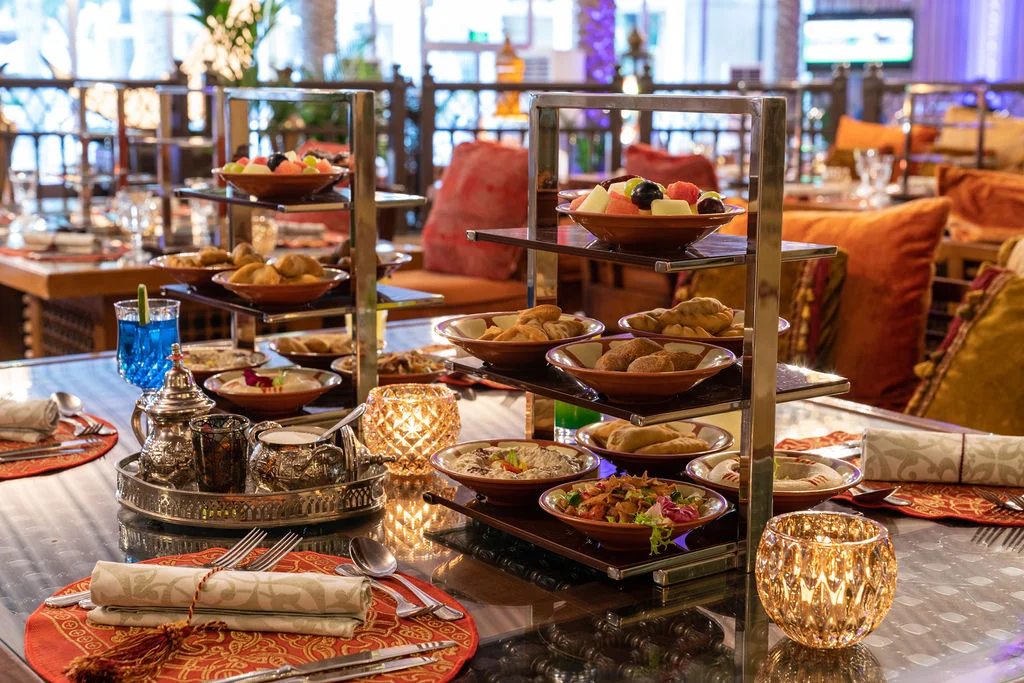
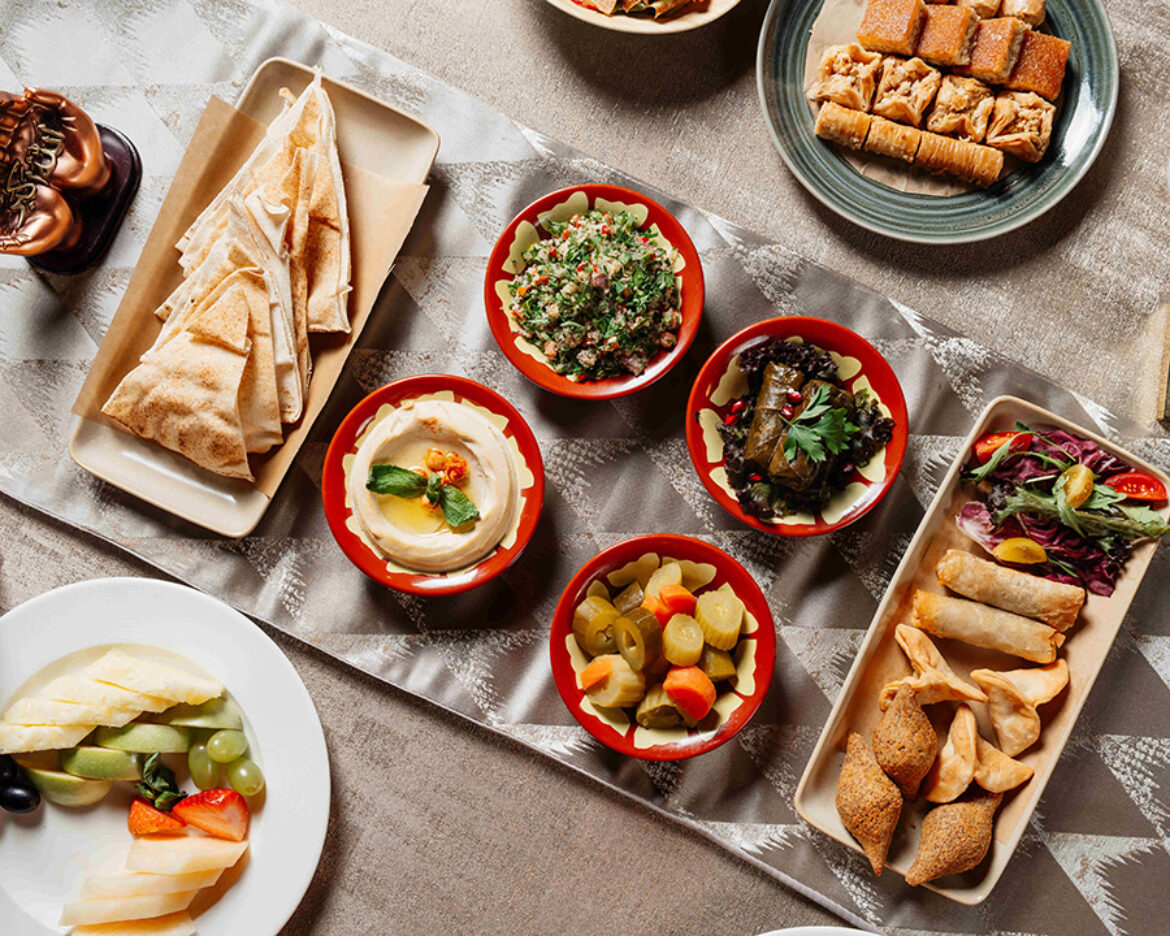
Most iftar buffets and set menus in Dubai include dates and Ramadan juices to break the fast, mezze such as hummus, moutabal, and fattoush, soups, grilled meats, traditional mains like lamb ouzi and biryani, and desserts such as kunafa, umm ali, and seasonal sweets.
Suhoor is technically the pre-dawn meal eaten before the fast begins again. In Dubai, though, it has evolved into something far more social. Suhoor in Dubai starts at around 10 PM and goes until 2 or 3 AM; it is a social gathering set in giant, air-conditioned tents where people smoke shisha, play card games, eat light meals, and socialize late into the night. Think of it as the alternative nightlife of Ramadan.
Ramadan tents and majlis are the dedicated pop-up dining structures that hotels and venues erect specifically for the holy month. These venues are designed for comfort, reflection, and togetherness. Some are perfect for family iftars, while others suit corporate gatherings or luxury evenings.
The Full Price Spectrum: From AED 39 to AED 410 and Everything Between
One thing that surprises people new to Ramadan dining in Dubai is how wide the price range actually is. This is not a scene reserved for hotel guests and expense accounts.
Luxury iftar options like Atlantis and Armani command AED 295 to 410 per person, while affordable alternatives in areas like Al Barsha and Karama start from AED 40 to 120.
To put the tiers in plain terms:
Under AED 100 (Budget): Community restaurants across Deira, Bur Dubai, and Karama, Lebanese set menus, South Asian buffets, and casual spots like Mr Toad’s and Black Tap. Perfectly respectable food, zero pretension, and often the most authentic atmosphere in the city.
AED 100 to AED 250 (Mid-range): Hotel restaurant buffets, waterfront spots, and themed set menus. This is where the majority of Dubai’s resident expat community lands, and the value-to-experience ratio tends to be strong.
AED 250 to AED 410+ (Luxury): Five-star hotel pavilions, Ramadan tents at iconic venues, designer-collaboration majlis spaces, and experience-led concepts with live oud players, ceremonial cannon traditions, and views of the Burj Al Arab.
The smart move is knowing which tier suits your purpose. A family iftar with young children does not need to cost AED 350 per head. A business iftar for clients at a hotel tent, however, is a legitimate occasion for the premium experience.
The Luxury Iftar Experiences Worth the Splurge
Asateer Tent at Atlantis The Palm
Consistently ranked among the best in the city, and for good reason. The Asateer Tent overlooks the Arabian Gulf and Palm Island on one side and Dubai’s cityscape on the other. The iftar buffet blends Khaleeji, Arabesque, and Persian flavours, featuring classic Ramadan dishes alongside regional favourites including seafood paella, spit-roasted whole lamb, freshly baked breads, and a fatteh and foul royal bar.
The iconic Ramadan tent also offers suhoor, with iftar priced at AED 295 Monday to Thursday and AED 325 Friday to Sunday. Book well in advance, this one sells out consistently across the entire holy month.
Armani/Pavilion at the Burj Khalifa
The Burj Khalifa hotel’s pavilion offers a timeless iftar buffet every evening, featuring dishes from the hotel’s signature restaurants including shawarma, risotto, hot and cold starters, and ouzi, priced at AED 410 per adult.The setting alone justifies the premium for a special occasion.
Fairmont The Palm
The Fairmont transforms the Fairuz Garden into an incredible outdoor dining area, with a curated iftar menu and relaxed live entertainment throughout the evening, priced at AED 315 for adults and AED 125 for children aged six to twelve. The garden setting makes this one of the more atmospheric experiences in the city.
Nammos Dubai with the Dior Ramadan Tent
A relatively new concept but already creating significant buzz. For Ramadan 2026, Dior has designed an exclusive tent for Nammos Dubai, transforming the waterfront venue into something far more couture, with intricate patterns, warm textures, and an understated palette against the waters of the Arabian Gulf. If you want your sunset to arrive with a certain kind of extra, this is the booking.
Al Nafoorah at Jumeirah Emirates Towers
For those who want authenticity over spectacle. Guests searching for a traditional Lebanese iftar in Dubai consistently consider Al Nafoorah one of the most reliable choices. The food is the story here, not the decorations.
The Best Budget Iftars in Dubai (Under AED 100)
This section exists because most Ramadan guides in Dubai bury the affordable options under three pages of luxury hotel content. The affordable iftar scene is genuinely excellent; some of the most atmospheric meals you will have during Ramadan are in community restaurants where the crowd is large, the food is proper, and nobody is trying to upsell you a premium drinks package.
Deals through platforms like Cobone this Ramadan include a 5-star iftar at the Radisson Blu Waterfront for AED 99 (down from AED 219), iftar at Carlton Downtown for AED 79, and several other hotel restaurant options under AED 100. Pre-booking through deal platforms during Ramadan can save you 40 to 55% compared to walk-in prices at the same venues.
For street-level, neighbourhood options:
Allo Beirut offers a traditional Lebanese iftar set menu throughout Ramadan, featuring dates, jallab juice, lentil soup, a mixed starter platter, fattoush, hummus, a choice of main, and desserts like atayef ashta or halawet el jibn rolls, priced at AED 85 per person.
Biryaniwalla and Co. offers a special iftar buffet across its Al Nahda, Hamriya, and Karama branches, with big flavours at around AED 39 per person. For families, this is hard to beat on value.
Gardenia at Al Jaddaf Rotana runs a wholesome iftar buffet at AED 85 per person, with a spread built around authentic traditional flavours.
Suhoor: The Experience Most Visitors Miss Entirely
Here is an honest observation: most first-time Ramadan visitors in Dubai focus entirely on iftar and miss suhoor altogether. That is a real shame.
A few hours after iftar, restaurants drop the lights, swap playlists for oud, and serve until 2 or 3 AM. The real magnet is the seasonal suhoor tent: a low-lit pavilion where families sink into cushions, friends trade backgammon victories, and conversation stretches until the early hours.
The atmosphere at a suhoor tent around midnight in Dubai is genuinely unlike anything else the city offers during the rest of the year. Hotels go all out on the ambience, the live music is typically traditional and understated, and the pace is unhurried in a way that Dubai rarely allows itself to be.
New for Ramadan 2026, the Layalina Majlis brings beachfront dining to West Beach, with an extensive iftar buffet and a separate suhoor à la carte menu that lets you pick exactly what you are craving. Sand under your feet, sound of waves, and a proper suhoor spread is a combination that is hard to argue with.
The Iftar Tent Experience vs. a Restaurant: Which Is Right for You
This is worth a moment of honest consideration before you book.
Ramadan tents suit large groups, families, corporate occasions, and anyone who wants the full atmospheric experience; live cooking stations, traditional entertainment, cushioned seating areas, and the social spectacle of a large shared space. They tend to be louder, busier, and more theatrical.
Restaurant set menus suit smaller groups, couples, and anyone who prefers a more focused meal. The food quality is often comparable to the best hotel tents, but the intimacy is different. Venues like Amaya at Dubai Mall offer a special iftar set menu with traditional and modern dishes while overlooking the half-hourly Dubai Fountain show, accompanied by a live oud player on weekends, priced at AED 269.
Desert iftar experiences are a third category entirely. A desert iftar in Dubai offers a unique blend of luxury dining, cultural entertainment, and a serene Arabian dunes setting, with corporate packages typically ranging from AED 150 to AED 350 per person. For tourists, especially, combining iftar with a desert experience makes for one of the most memorable evenings possible.
What Non-Muslims Need to Know Before Their First Iftar
This question comes up constantly, and the answer is straightforwardly welcoming. Non-Muslims are fully welcome to attend iftar events in Dubai and are encouraged to follow basic Ramadan etiquette and dress modestly.
A few practical things worth knowing:
Arrive close to sunset, not before. The energy of an iftar experience is entirely tied to the moment of the cannon and the call to prayer. Arriving thirty minutes early and sitting in a pre-sunset lull misses the point. Arrive ten to fifteen minutes before sunset and let the atmosphere build.
Follow the ritual sequence. Start with dates and water, as everyone around you will. This is not a rule enforced on non-fasting guests, but doing so shows cultural awareness and is genuinely appreciated.
Dress modestly. Not necessarily formally, but covered shoulders and knees as a baseline is appropriate across all Ramadan venues.
Eating or drinking in public during daylight hours is heavily discouraged during Ramadan in the UAE. Restaurants are not closed during the day but are often screened from view, and public consumption of food or water on streets is not acceptable behaviour during fasting hours. Respect local customs: eating or drinking in public before sunset is generally discouraged during Ramadan.
The Suhoor Cannon Tradition You Should Not Miss
Dubai Police fire a ceremonial cannon to signal the end of the fast each evening. Head to the Burj Khalifa park or Madinat Jumeirah before sunset; it is a huge spectacle. No restaurant, no booking required. Just show up and be part of the moment. It is one of those Dubai experiences that costs nothing and stays with you.
How to Actually Get the Best Ramadan Restaurant Deal in Dubai
A few tactics that make a genuine difference:
Book via deal platforms early. Sites like Cobone aggregate discounted iftar packages from hotel restaurants, and the best offers; sometimes 50% off the walk-in rate, that appear weeks before Ramadan starts and sell out fast.
Check Accor and Marriott member rates. Several hotels, including Movenpick Jumeirah Beach, offer 20% discounts for Accor members on their Ramadan iftar offers. If you hold loyalty memberships with major hotel chains, it is worth checking the member rates before booking at face value.
Weekday vs. weekend pricing. Several premium venues apply different rates. At Atlantis The Palm, iftar is priced at AED 295 Monday to Thursday and AED 325 Friday to Sunday. If the occasion is flexible, a weekday booking at the same venue can save a meaningful amount per head.
Buy-four-get-one promotions appear at several venues specifically during Ramadan. Centara Mirage Beach Resort, for example, offers a buy-four-get-one-free promotion alongside a 20% advance-booking discount.For groups, this is worth specifically asking about when you call to reserve.
The Ramadan Dining Calendar: When to Book What
Not all of Ramadan is equally busy from a dining perspective. The first few days are the busiest as residents and visitors scramble for their favourite spots. The middle two weeks are more settled. The final days, particularly Laylat al-Qadr and the run-up to Eid, see a surge again.
Popular venues often become fully booked before the first fast even begins; early planning for Dubai iftar tents and Ramadan dining experiences is always recommended.
As a working rule: book luxury tent experiences two to three weeks before Ramadan. For budget and neighbourhood restaurants, week-of booking is usually fine on weekdays. Weekends throughout Ramadan are always busy everywhere.
Five Things That Separate a Great Iftar Experience from a Disappointing One
- The crowd matters as much as the food. The best iftar atmosphere comes from eating with people who understand and are part of the occasion. Community restaurants in Deira and Karama often deliver more authentic energy than hotel venues twice the price.
- Timing is everything. An iftar where you arrive after the cannon and after the prayer, when the food rush is already in full swing, is a chaotic scramble. Arrive early. Be seated. Let the moment happen around you.
- Do not underestimate the dessert section. Kunafa, umm ali, luqaimat, and seasonal Ramadan sweets are worth protecting room for. The dessert tables at major iftar buffets are one of the culinary highlights of the entire holy month.
- Outdoor settings are transformative. A rooftop or waterfront iftar as the sun drops below the horizon is a genuinely different experience from an indoor hotel ballroom. If the weather allows it, choose outdoor seating every time.
- Suhoor is not optional. If you only do iftar and skip suhoor, you have only seen half of what Ramadan dining in Dubai offers.
The Honest Verdict
Dubai does Ramadan restaurants better than almost anywhere else on earth. The sheer range of what is available from AED 39 biryani buffets to AED 410 pavilion dinners under the Burj Khalifa; means there is no excuse to miss the experience regardless of budget.
The official Visit Dubai Ramadan dining guide is worth bookmarking for neighbourhood-by-neighbourhood breakdowns and vetted restaurant listings. For food culture context on why communal meals like iftar carry such deep social weight across the Arab world, the BBC Food Culture archive has genuinely good coverage of the traditions behind the dishes.
The holy month transforms Dubai’s restaurant scene into something that operates on a completely different frequency from the rest of the year. Slower in daylight, electric after dark, and punctuated by moments of communal warmth that are entirely unlike the city’s usual pace.
Book early. Arrive before the cannon. Leave room for the kunafa.